Nayanta’s fully residential four-year undergraduate programme in arts, sciences, and technology offers depth across disciplines to solve real-world problems


undergraduate programme
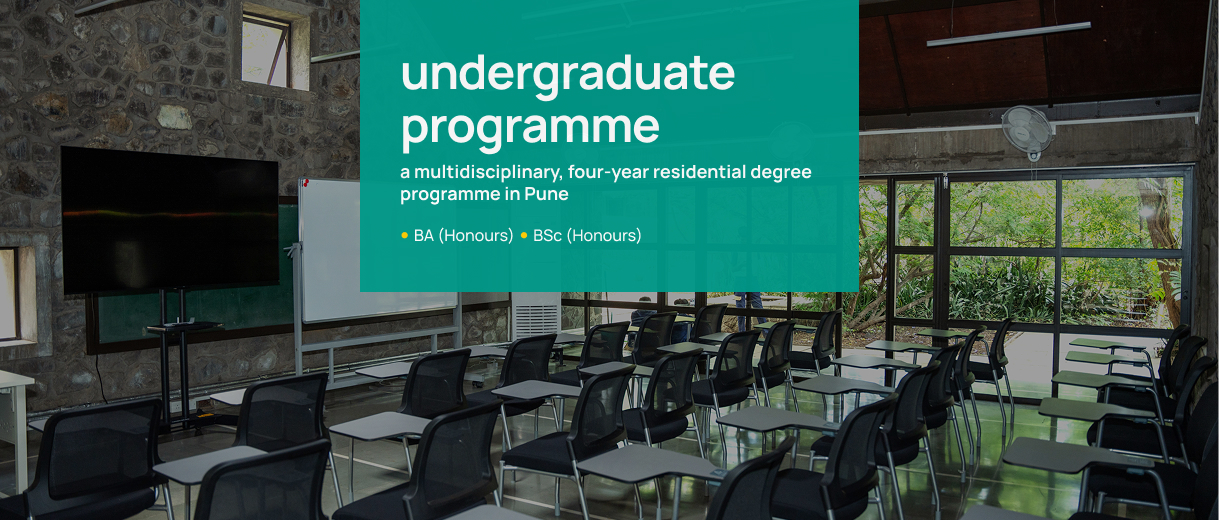
overview
Nayanta’s undergraduate curriculum enables students with the skills to thrive in a complex and interconnected world.
programme snapshot
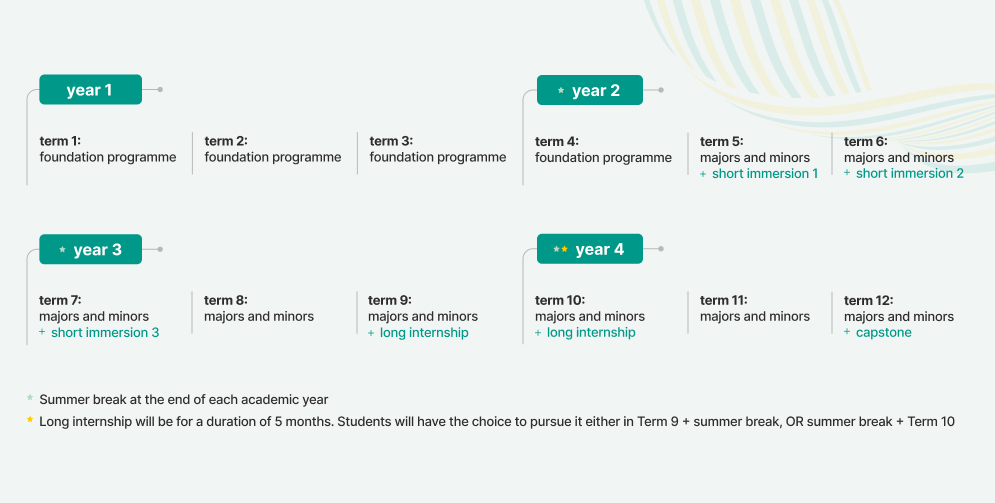
your four year journey at Nayanta
foundation programme themes
build a strong, interdisciplinary academic base

Design Thinking and Innovation

Perspectives in Sociology and Psychology

Introduction to Scientific Thought

World Music, Literature, and Arts

Communication and Writing

Gender Sensitivity

AI and Data Analytics

From Ideation to Working Prototype

Leadership and Ethics

Systems Thinking and Problem Solving

Philosophy of Science

Introduction to Research

Introduction to Computer Science and Programming

Economic Growth and Development of India

Mathematics and Logic

Scientific Method

Introduction to Economics

Indian Constitution
your majors/minors
specialisations are offered from year 2, after successful completion of the foundation programme. students can opt for a range of major-minor combinations, including double and interdisciplinary majors. we work with every student to help them arrive at a combination that speaks to their talents, interests, and aspirations.
major
select upto 2 majors. (click on each major to learn about the courses offered)
minor
pair your first major with a minor. (click on each minor to learn about the courses offered)
communication and writing

a four-year journey
- critical thinking and academic research/writing
- professional communication
- active listening, close reading, and questioning
- public speaking and multimodal communication

3 immersions, 1 internship and 1 research project
Nayanta students undertake three in-depth immersions over three terms ( Term 5, 6, & 7) — one each in the business, social, and government sectors. In their final year, students choose between a 5-month internship or a research track; the internship may be undertaken in any sector of their choice.
5-month internship in sector of choice
5-month research project with a faculty
capstone project
students pursue a capstone project in the final year, applying both classroom and real-world learning to solve a grand challenge
our partners
we collaborate with the best to bring you world-class solutions and competitive advantages.











Nayanta Compass
a four-year
personal
development
programme








programme and credit structure
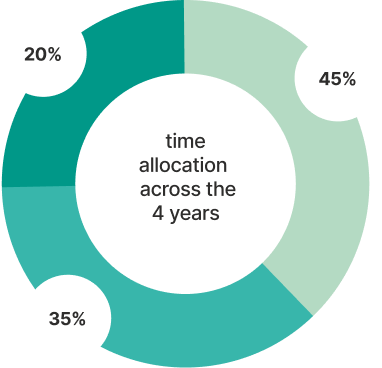
- core and elective courses
- multidisciplinary foundation courses
- internship and capstone project
categories |
required credits |
|---|---|
foundation programme* |
50 |
communication and writing course |
12 |
majors (core and elective) |
60 |
interdisciplinary / cross-listed courses** |
12 |
multidisciplinary courses |
16 |
internships |
18 |
capstone project |
8 |
*Credits from the Foundation Programme may not be counted towards the major.
**Credit requirements for Cross-Listed Courses may vary depending upon the chosen major.
***Total Credits requirements may vary depending upon the chosen major. This does not include the mandatory Co-curricular courses worth 6 credits.